

The secret to lasting business success isn’t complicated. It’s not about having the flashiest technology or the biggest marketing budget. It’s about one thing: the customer. When a business truly puts the customer experience at the heart of everything it does, growth naturally follows.
Think about the last time you switched providers or stopped buying a product. Chances are, it wasn’t because the product was bad; it was because you felt ignored, misled, or frustrated by the company. Customer expectations are higher than ever, and if you don’t meet them, your competition certainly will.
This guide breaks down actionable, proven strategies you can start using today to shift your focus, solve common pain points for your customers, and build a thriving, loyal following that will stick with you for years to come.
Table of Contents
Why Being Customer-Centric Matters More Than Ever?
In the past, customers had few choices. Today, the internet means every product and service is just a click away. If you create friction, your customers will simply walk away, and you might not even know why.
The Real Cost of Ignoring Your Customers
Many business leaders focus intensely on acquiring new customers—the “hunt”—but they often forget the massive value of keeping the customers they already have. Ignoring existing customers leads to one major pain point for your business: high churn.
- You spend more money: It costs significantly more to get a new customer than it does to keep an old one. If you’re constantly replacing people who leave, your marketing budget is out of control.
- Bad word-of-mouth spreads fast: A dissatisfied customer won’t just leave quietly; they will tell their friends, family, and social media followers about their poor experience. This erosion of trust is hard to rebuild.
- Missed opportunities: Existing customers are your best source of growth. They buy more often, try new products, and are more willing to try an upgraded version of what they already love—but only if they feel valued.

How Strong Loyalty Drives Real Profit?
A customer-first approach is not a cost; it’s an investment that pays huge dividends. When people love your brand, they don’t just stay; they become advocates. They tell their colleagues, post positive reviews, and bring in new business for free. This stable, loyal base allows your business to plan for the future with confidence and spend less time worrying about competitor price wars. You get to focus on serving them better, creating a virtuous cycle of loyalty and profit.
Strategy 1: Really Listening to Feedback (The Foundation)
If you don’t know what your customers are struggling with, you can’t help them. The biggest pain point for customers is feeling like their voice doesn’t matter. They take the time to send an email, fill out a form, or leave a comment, only to have it vanish into a black hole.
Setting Up Effective Feedback Loops
Listening isn’t passive; it requires setting up systems that make it easy for customers to talk to you, and even easier for you to hear them.
- Simple, targeted surveys: Don’t send a 50-question monster survey. Send short, one- or two-question surveys immediately after a key interaction, like a purchase or a support call. Ask things like: “How easy was it to complete your purchase today?” or “Did our agent solve your problem?”
- Monitor social media chatter: People are often more honest on social platforms. Set up alerts for your brand name and related keywords. A complaint on Twitter might be an early warning sign of a bigger problem.
- Make contact channels visible: Ensure your “Contact Us” page is easy to find and offers multiple ways to reach you, whether by phone, email, or live chat. Don’t hide the phone number at the bottom of the page.
- Talk directly to your front-line team: The people answering phones and responding to emails hear the rawest feedback. Set up a regular meeting where your service and sales teams can share common frustrations or repeated questions they hear from customers. This qualitative data is gold.
Turning Complaints into Opportunities
Every complaint is a chance to win back a customer and fix a flaw in your system. Instead of viewing a complaint as a burden, look at it as free consulting.
- Acknowledge quickly: Respond right away, even if you don’t have the solution yet. A simple “We received your message and are working on it” makes a huge difference.
- Take ownership: Never blame the customer or another department. Just say, “I’m sorry this happened, and I’m going to make it right.”
- Follow up: After the issue is fixed, check in a week later to make sure everything is still working well. This small action shows you care about the long-term relationship, not just closing the ticket.
Strategy 2: Creating a Personalized Experience
In the age of big data, customers feel like they are just a number on a spreadsheet. Their pain point is the generic, one-size-fits-all experience they receive from most companies. A personalized experience makes them feel recognized and special.
Knowing Your Audience Deeply
Personalization starts with good data management. You don’t need to be creepy or collect excessive information, but you should know the basics:
- Purchase history: What did they buy, and when? This helps you suggest relevant products or services they might need next.
- Interaction history: Have they contacted support before? What was the issue? You shouldn’t have to ask them to repeat their story every time they call.
- Preferences: Do they prefer emails or text messages? Do they like discounts or early access to new items?
Simple Ways to Add a Personal Touch
Personalization doesn’t have to be a complex algorithm. Small, thoughtful actions create big feelings of loyalty:
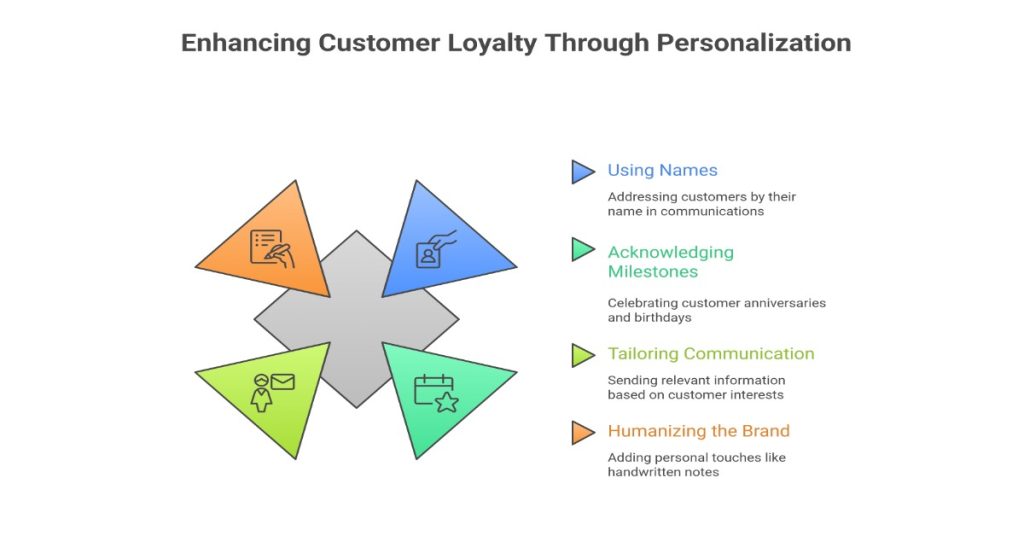
- Use their name: This seems basic, but it still works. Use their name in emails, and make sure your team uses it during calls.
- Acknowledge milestones: Send a simple, meaningful note on their anniversary as a customer, or offer a special discount on their birthday.
- Tailor communication: If a customer only buys accessories for their car, don’t send them emails about whole new cars. Filter your messages so they only receive information relevant to their actual interests.
- Humanize your brand: Sometimes, a handwritten thank-you note or a small, unexpected freebie with a purchase can make a huge impact because it shows a human being is involved.
Strategy 3: Making Service Effortless (Reducing Friction)
Friction is the enemy of the customer relationship. The moment a task becomes difficult—whether it’s returning a product, changing an address, or finding an answer—you lose goodwill. The common pain point here is wasted time and complexity.
Investing in Great Self-Service Tools
Many customers don’t want to talk to a person; they just want a quick answer so they can get back to their day. Giving them the tools to solve their own problems quickly is a huge win for both of you.
- A powerful knowledge base: Build an easy-to-search library of articles, video tutorials, and FAQs that answer the most common questions your service team receives. Keep it organized and up-to-date.
- Intuitive product design: Design your product or website so that it just works, without needing an instruction manual. The less instruction required, the better the experience.
- Use simple chatbots effectively: Chatbots shouldn’t pretend to be human. Set them up to do one thing very well: instantly direct the customer to the right support article or the right human agent.
Training Your Team to Be Problem Solvers
The single most important part of your service system is the people who represent your brand. Give them the freedom and training they need to solve problems immediately.
- Empowerment: Nothing is more frustrating for a customer than hearing, “I can’t do that; you need to talk to my manager.” Give your team members the authority to issue refunds, approve exchanges, or provide discounts up to a certain limit without needing three layers of approval.
- Focus on resolution, not time: Don’t measure your team by how fast they end a call (call time). Measure them by how quickly the customer’s issue is completely resolved (first contact resolution).
- Soft skills matter: Train them on empathy. A phrase like, “I hear how frustrating that must be,” goes further than a robotic apology.

Strategy 4: Building Trust Through Transparency
Trust is the currency of customer loyalty. The customer pain point here is feeling deceived, whether by hidden fees, misleading advertising, or unclear terms. You build trust by always being open and honest.
Honest Communication is Key
When things go wrong—and they always will, eventually—your reaction defines your character.
- Admit mistakes quickly: If your website crashes, your delivery is late, or you sent a faulty product, admit it publicly and quickly. Silence or denial just damages your credibility.
- Be clear about pricing: Hidden fees or confusing subscription terms are the fastest way to lose trust. Make your pricing straightforward and simple to understand before the customer commits to buying.
- Set realistic expectations: If a product will take six weeks to arrive, tell the customer it will take six weeks—don’t promise four. It’s always better to over-deliver on a conservative promise than to under-deliver on an ambitious one.
Standing By Your Product or Service
A generous and clear guarantee removes risk for the customer and shows you believe in what you sell.
- Clear return policies: Your return or cancellation policy should be easy to find and easy to execute. If it’s a struggle to return an item, people won’t buy from you again.
- Warranties and support: Back up your claims with strong warranties and accessible long-term support. This signals that you are in it for the long run, not just a quick sale.

Read More
Streamlining Data Analysis: Online Survey Tools vs Offline Questionnaire Processing

The Unseen Skew: Mastering Techniques for Mitigating Bias in Your Questionnaires

Driving Results with Customer Experience Best Practices
The Bottom Line
Putting customers first isn’t just a nice idea; it is the most effective growth strategy available to your business. When you focus on solving their pain points—the frustration of being ignored, the annoyance of difficult service, and the feeling of being just a number—you turn simple transactions into real, lasting relationships.