
You are scrolling through your phone, hunting for a quick coffee order. One app remembers your usual latte, offers a discount, and delivers it steaming hot in under 30 minutes. The next? A glitchy interface, forgotten preferences, and a cold brew that tastes like regret.
That split-second choice? It’s not just convenient. It’s your wallet deciding where loyalty lives.
In today’s market, customer experience (CX) isn’t a nice-to-have—it’s the engine driving revenue, retention, and word-of-mouth gold. Businesses ignoring it risk fading into irrelevance.
By 2025, 89% of companies will compete primarily on CX, outpacing product or price as the key battleground. This blog dives deep into customer experience best practices that deliver real results. We’ll unpack strategies, tackle common questions, and arm you with actionable steps.
Whether you’re a startup founder or a seasoned exec, these insights will help you turn one-off buyers into raving fans.
Table of Contents
What Exactly Is Customer Experience?
Let’s start with the basics. What is customer experience, anyway?
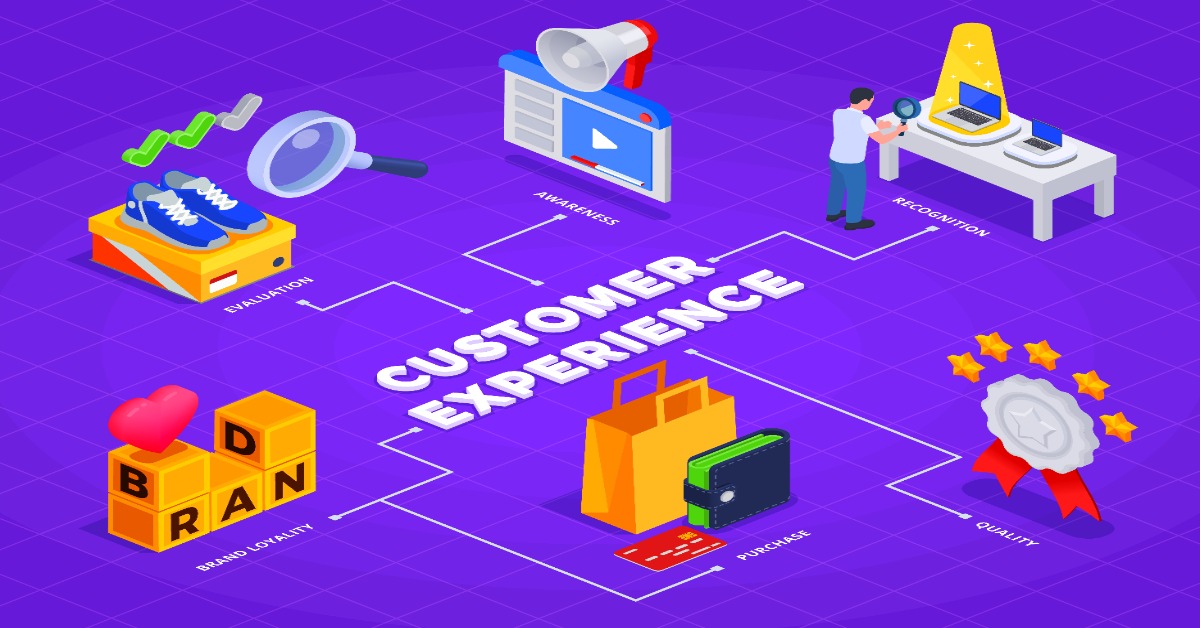
At its core, customer experience is the sum of every interaction a person has with your brand from the first ad click to post-purchase support. It’s not just support tickets or flashy websites. It’s the emotional thread weaving through ads, emails, chats, and returns.
Think of it as the story your customer tells themselves about you. A seamless unboxing? That’s delightful. A botched refund? Pure frustration.
CX spans the entire customer journey: awareness, consideration, purchase, retention, and advocacy. Miss one touchpoint, and the narrative sours.
But here’s the twist: it’s subjective. One person’s “wow” is another’s “meh.” That’s why mapping the customer journey is a cornerstone of effective CX strategies.
By understanding these moments, you craft experiences that feel personal, not programmatic.

Why Customer Experience Matters More Than Ever?
Now, the million-dollar question: Why is customer experience important for business success?
Simple: Happy customers stick around, spend more, and shout your praises from the rooftops. Over 50% of consumers will bolt to a competitor after just one bad interaction. That’s not hyperbole, it’s a revenue killer.
On the flip side, top CX performers grow revenues 80% faster than laggards. Why? Because 86% of buyers are willing to pay a premium for standout service.
CX isn’t fluff, it’s profit. Loyal customers spend 140% more when they rate their experience a perfect 10. They refer friends, slashing acquisition costs.
In B2B, it’s even starker. Poor CX erodes trust, stalling deals. Great CX? It seals partnerships and unlocks upsells.
The data screams urgency: 80% of customers value experience as much as your product itself. Ignore it, and you’re handing market share to rivals on a silver platter.
Mapping the Customer Journey: Your CX North Star
Ready to build? Start with customer journey mapping one of the top customer experience best practices.
This isn’t a one-off exercise. It’s a visual blueprint of every step your customer takes, from “I need this” to “I’m obsessed.”
Grab a whiteboard. List touchpoints: Website browse, email nurture, checkout friction, follow-up call.
Now, layer in emotions. What’s the pain at checkout? Joy in unboxing?
Involve your team in sales, support, marketing. Their boots-on-ground insights reveal blind spots.
Refine quarterly. As behaviors shift (hello, AI chatbots), so must your map.
The payoff? Spot leaks early. Zap Zappos famously maps journeys to preempt issues, turning potential churn into cheer.
Result: Smoother paths, higher satisfaction scores, and dollars flowing back in.

Personalization: The Secret Sauce of Modern CX
Ever bought shoes online, only to get ads for the same pair? Annoying, right?
That’s lazy targeting. True personalization in customer experience flips the script.
Use data wisely—past buys, browse history, even weather—to tailor every nudge. Recommend that rain jacket before the storm hits.
Stats back it: Personalized brands snag 40% more revenue. Plus, 65% of shoppers expect it; 80% buy more when they get it.
Start small. Segment emails. Train reps on quick profile peeks.
Avoid creepiness—transparency builds trust. “We noticed you love sci-fi—here’s a curated read.”
In 2025, with gen AI adoption hitting 80%, hyper-personalization becomes table stakes. Get ahead, or get left.
Feedback Loops: Listening to Drive Action
Feedback isn’t a box to tick. It’s fuel for customer experience best practices that stick.
Build loops at key moments: Post-purchase surveys, NPS blasts, in-app thumbs-up.
But don’t stop at collection. Act fast. A “What sucked?” response? Fix it, then loop back: “We upgraded based on you.”
This closes the circle, boosting trust. Customers feel heard, not harvested.
Tools like SurveyMonkey or Typeform make it easy. Aim for brevity under 3 questions.
Pro tip: Segment responses. High NPS? Double down. Low? Root-cause it.
The result? Iterative improvements that compound. One retailer slashed churn 15% by turning gripes into gains.

Omnichannel Magic: Seamless Across Every Channel
Customers zig-zag: App to store to chat. Omnichannel CX ensures no hiccups.
It’s not multiple channels, it’s one unified experience. Cart abandons on mobile? Pick up in-store, no re-entry.
91% of execs say it’s key to success, yet only 29% deliver it well. Gap alert.
Integrate systems: CRM with POS, email with social. Train teams on handoffs.
Sephora nails this virtual try-ons online feed in-store stylists. Engagement? 250% higher. Retention? 90% bump.
For you: Audit silos. Test end-to-end. Polish the seams.
Empowering Your Team: Employees as CX Heroes
What role does employee training play in customer experience?
Huge. Frontliners are your brand’s face. Untrained? They fumble, customers flee.
Invest in ongoing training: Empathy workshops, product deep-dives, scenario role-plays.
Give autonomy empower “yes” moments, like comping a latte for a wait.
Gallup says engaged employees deliver 10% higher CX. (Wait, no direct, but infer from general.)
Link incentives to CX metrics. Celebrate wins.
Zappos’ reps spend hours per call with no scripts, just solutions. Turnover? Low. Loyalty? Sky-high.
Your team isn’t supporting experienced architects.
Measuring Success: Beyond Vanity Metrics
How do you measure customer experience?
Ditch likes for metrics that matter: Net Promoter Score (NPS), Customer Effort Score (CES), retention rates.
NPS asks: “How likely to recommend? 0-10.” Detractors (0-6) signal fixes; promoters (9-10) your evangelists.
Track CSAT post-interaction. Aim for trends, not snapshots.
Layer in qualitative: Review mining, sentiment analysis.
Benchmark against peers. Tools like Qualtrics automate.
Here’s a quick table for clarity:
| Metric | What It Measures | Target | Why It Drives Results |
| NPS | Loyalty | 50+ | Predicts growth |
| CES | Ease of process | <3 | Cuts friction |
| Retention % | Repeat business | 80%+ | Lowers acquisition cost |
| CSAT | Satisfaction | 85%+ | Gauges immediate wins |
Tie to revenue: High scorers see 5-8x returns.
Review monthly. Adjust. Measure to move the needle.
Real-World Examples: CX That Converts
What are some examples of excellent customer experience?
Ritz-Carlton: Employees get $2,000 “discretion fund” for guest wow-moments. A kid’s lost dinosaur? Replaced overnight. Loyalty? Ironclad.
Amazon: One-click buys, predictive shipping. Friction? Zilch. Prime retention? 90%+.
Starbucks app: Rewards, mobile order, personalized offers. Daily drinkers? Hooked.
These aren’t accidents. They’re deliberate CX strategies—data-driven, human-centered.
Your takeaway: Study rivals. Adapt, don’t copy. What’s your “dinosaur” moment?

How to Improve Customer Experience: A Step-by-Step Roadmap
So, how can businesses improve customer experience?
Step 1: Audit current state. Survey 100 customers. Map pains.
Step 2: Prioritize quick wins. Fix checkout bugs first.
Step 3: Roll out one practice—say, feedback loops. Train all.
Step 4: Scale with tech. AI for personalization, analytics for insights.
Step 5: Iterate. Quarterly reviews. Celebrate progress.
Budget? Start lean—internal tools, free surveys.
Timeline: 3 months to traction, 12 to transformation.
Onboarding shines here: 86% more loyalty with solid welcomes. Guide newbies, reduce early exits.
Patience pays. Consistent tweaks compound into cultural shifts.
The Future of CX: AI and Beyond
2025 brings AI as CX co-pilot. 99% of buyers say service sways purchases.
Chatbots handle 80% of queries, freeing humans for heart-to-hearts.
But balance: AI predicts needs; empathy seals bonds.
Ethical data use? Non-negotiable. Privacy builds trust.
Sustainability weaves in too green packaging delights eco-shoppers.
Stay agile. CX evolves; so must you.
Read More
Limiting Bias Through Effective Sampling Error Control in Online Surveys

Evaluating Effectiveness: Methods for Measuring Customer Experience

Keeping Responses Confidential with Anonymous Surveys
Wrapping Up: Your CX Action Plan
Driving results with customer experience best practices boils down to one truth: People buy feelings, not features.
From journey maps to empowered teams, each tactic builds a fortress of loyalty.
Pick three to start: Map, personalize, measure.
Track wins. Share stories. Watch revenue rise.
Your customers aren’t metrics; they’re the reason you thrive.
What’s your first move? Drop a comment.